
Checking St. John Parish Criminal History
There is no single free public database that contains every St. John the Baptist Parish criminal record. Begin with the event closest to the question. The Sheriff's arrest-report archive can confirm a recent published arrest. The parish correctional channel or Louisiana VINELink can show custody. Filed charges, minutes, pleas, dismissals, and sentences come from the Clerk of Court. A person reviewing their own statewide fingerprint history uses the Louisiana State Police Right to Review process.
Use a full legal name, prior names, date of birth when the official form permits it, and an approximate event date. Name spelling alone can point to the wrong person. A docket number, incident number, booking identifier, or State Identification number is much stronger. Follow the record forward until the final disposition is found.
- Identify whether the question concerns an arrest, court case, custody, warrant, or personal rap sheet.
- Search the matching official channel with the best available identifiers.
- Compare dates, agency names, charge text, and docket or booking numbers.
- Obtain the underlying Sheriff report or Clerk case file when a summary is not enough.
- Request a certified court copy or fingerprint-based Right to Review when formal proof is needed.
St. John Parish Records Cross Two Banks
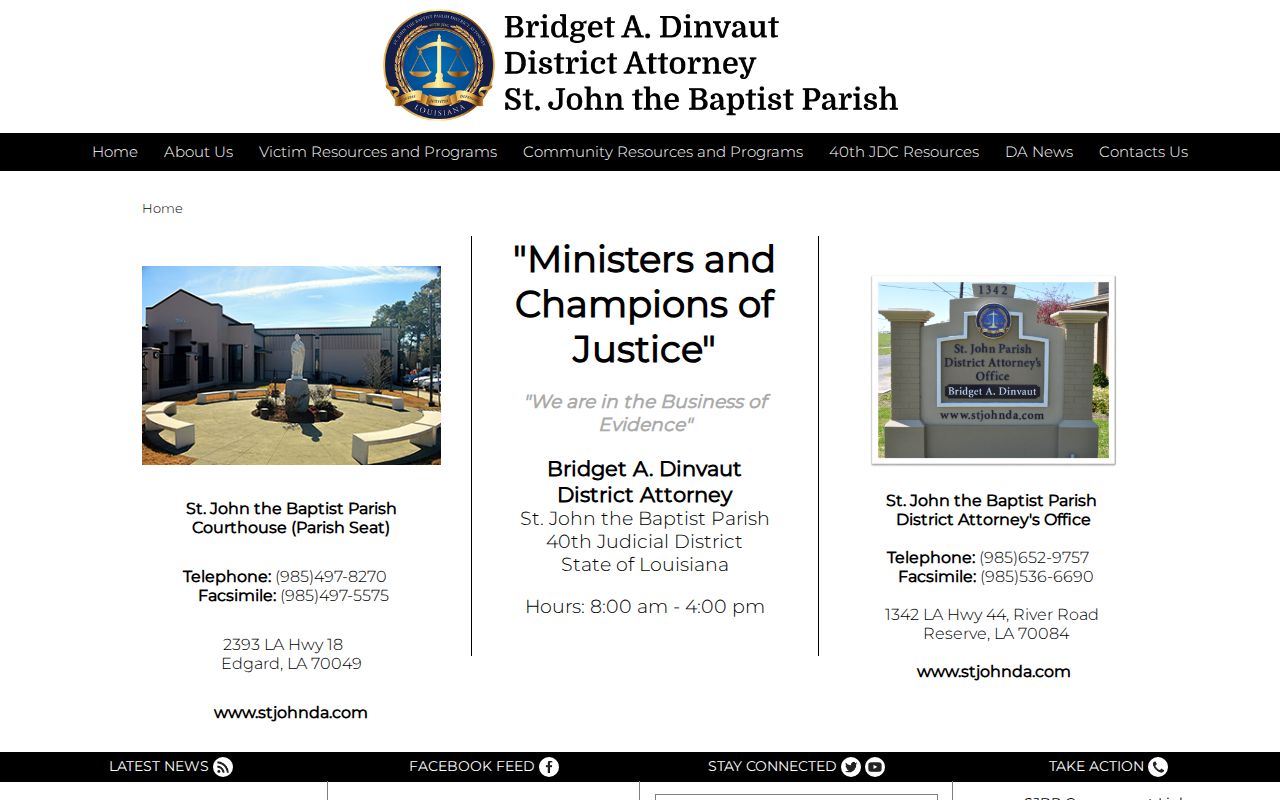
The parish's record system is split by geography. The 40th Judicial District Court and Clerk sit at 2393 Highway 18 in Edgard, the parish seat on the west bank of the Mississippi River. Filed criminal pleadings, minute entries, judgments, sentencing papers, certified copies, and expungement filings belong there. Sheriff headquarters and the correctional center are in LaPlace on the east bank. They handle law-enforcement records, arrest reports, and local custody questions.
The Louisiana judiciary directory identifies the 40th Judicial District as the district court for St. John the Baptist Parish.

This division explains why one counter cannot supply a complete St. John the Baptist Parish criminal history. Court outcomes stay with the Clerk, while the Sheriff retains the original police and booking material.
Clerk of Court
2393 Highway 18
Edgard, LA 70049
Criminal cases and certified court copies
Sheriff Headquarters
1801 West Airline Highway
LaPlace, LA 70068
985-652-9513
Correctional Center
100 Deputy Barton Granier Drive
LaPlace, LA 70068
985-359-8625
Louisiana Official Background Checks
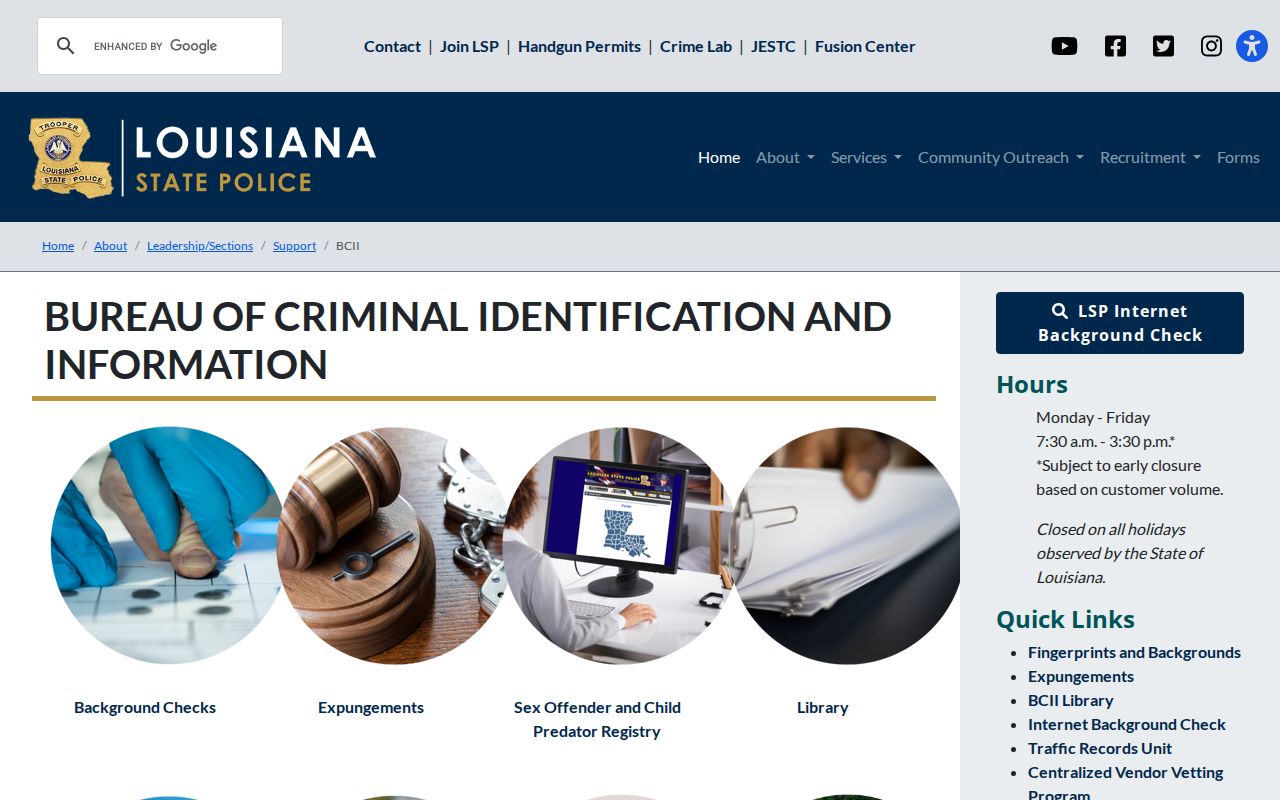
The Louisiana State Police Bureau of Criminal Identification and Information is the central criminal-history repository. Louisiana does not provide unrestricted public name searches of full state rap sheets. An individual can review their own record through the fingerprint-based Right to Review authorized by R.S. 15:588. Enrollment runs through the Louisiana Applicant Processing System, or LAPS, at an IdentoGO site selected during scheduling.
The BCII criminal-history page explains the repository's role and official products.
A mailed Right to Review is printed, signed, stamped as a true copy, and embossed. The electronic option arrives through a one-time secure link, has digital marks, expires after 30 days, and must be printed from a computer. Routine walk-ins at LSP headquarters ended. The total charge varies by purpose and vendor service, with a $5 LSP technology fee effective December 1, 2024.
St. John Parish Sheriff Record Requests
The Sheriff's public-records route fills gaps left by the online arrest archive. It is the correct channel for an incident narrative, arrest report, photograph, video, or older booking material held by the agency. A focused request should give the incident number if known, event date, location, involved names, and desired record type. Do not ask the Sheriff for a “full criminal history” when the intended product is a state Right to Review or a Clerk case search.
The St. John the Baptist Parish Sheriff's Office provides the main route to local law-enforcement services and records.

The published fee form lists $50 for a CD, $25 for printed records up to five pages, $1 per page when six or more pages are supplied, and $10 for mailing. Payment is due before processing. Checks or money orders go to the Sheriff's Office at P.O. Box 1600, LaPlace, LA 70069, attention Deputy Lindy Torres.
| Record channel | Best use | Starting detail |
|---|---|---|
| Sheriff arrest archive | Recent published arrests | Date range and name |
| Sheriff records request | Incident, arrest, video, or older material | Incident number, date, place |
| Clerk or Clerk Connect | Filed charges and case outcome | Name or docket number |
| LAPS Right to Review | One's own Louisiana rap sheet | Fingerprint appointment |
St. John Parish Criminal Record Types
Each St. John the Baptist Parish criminal record captures a different stage. An incident report describes an investigation. An arrest report states why an agency took a person into custody. Booking data records intake, charges received, bond, and custody. A complaint, bill of information, or indictment begins the filed court matter. The court case then records hearings, rulings, disposition, sentence, and costs.
Fingerprint-linked criminal-history information groups reported arrest cycles and outcomes at BCII. A warrant may be judicial, a bench warrant, an attachment, or another hold. Jail information covers parish custody, while the Louisiana DPS&C locator applies after transfer to state corrections. Juvenile and expunged records are normally withheld from ordinary public access.
- Agency records: incident, arrest, and warrant material created or served by law enforcement.
- Custody records: booking, bond, release, transfer, and notification information.
- Court records: filed charges, minutes, rulings, pleas, verdicts, and sentences.
- Repository records: fingerprint-linked arrest cycles and reported dispositions.
- Registry records: statutorily public profiles tied to registration duties.
How St. John Parish Records Flow
A deputy, trooper, or other officer creates the first incident and arrest paperwork. A custodial arrest moves into the parish correctional system, where identity data, fingerprints, a photograph, intake charges, property, and status are recorded. Fingerprints and arrest-cycle details travel to BCII. The District Attorney later decides what charge, if any, to prosecute. A bill of information or indictment opens the formal 40th JDC prosecution, and the Clerk maintains the filed record.
The 40th Judicial District Attorney handles prosecution for this one-parish district.
The practical flow is: Arrest → Booking → Charging decision → Court filing → Disposition → Sentence or release. Updates do not always arrive at every system at once. A recent Sheriff post can precede a court case, and the charge filed by the prosecutor may differ from the arresting charge.
Inside a St. John Parish Criminal Record
A Louisiana rap sheet often starts with legal name, aliases, date of birth, descriptive data, a State Identification number, and possible FBI or transaction identifiers. Arrest cycles then connect an agency, date, fingerprint transaction, and charges. Disposition segments show prosecution and court results when received. Custody or supervision entries may follow. Public views suppress Social Security numbers, full financial-account details, protected victim or minor information, and sealed material.
| Name and identifiers | Legal name, aliases, birth date, SID, and transaction identifiers when reported. |
|---|---|
| Arrest and booking | Agency, arrest date, fingerprints, intake charges, bond, and custody state. |
| Filed case | Docket, parties, charging document, minutes, settings, and rulings. |
| Disposition | Rejection, dismissal, plea, verdict, or other final court action. |
| Sentence | Custody, probation, fines, costs, and other ordered terms. |
| Restrictions | Sealed, juvenile, victim, and other protected information withheld from public view. |
Published parish arrest reports are far thinner. They may show a name, age, locality line, and charge or warrant description, but not the final result. For a sound St. John the Baptist Parish criminal history review, match that entry to the Clerk's later case.
St. John Parish Clerk Case Access
The Clerk is the source for docket numbers, filed charges, court minutes, hearings, pleas, judgments, sentences, and certified copies. Clerk Connect offers subscription access, but an account and payment may be required. The Clerk's fee page lists a $5 per-day internet subscription, $25 per month, and $300 per year. Criminal court copying and certification charges depend on the service requested, so readers should confirm the current schedule before ordering.
The official Clerk of Court site is the correct starting point for St. John the Baptist Parish court records.

The Clerk, not the Sheriff, controls the official court file. Prosecutor files are also different. Grand-jury information, active work product, victim details, and investigative material may remain confidential even when the charging paper and court minutes are public.
Note: A docket number is the safest key when two people share a name or when charges changed after arrest.
Public Access Laws in Louisiana
Louisiana Public Records Law, La. R.S. 44:1 et seq., starts from a right to inspect qualifying public records. It does not erase confidentiality rules. Criminal-history dissemination is separately limited, and the public cannot run an unrestricted state rap-sheet search. Court clerks and law-enforcement custodians may also withhold sealed records, juvenile matters, victim data, unexecuted warrant material, active-investigation information, and other protected content.
Key statutes:
R.S. 44:1 defines public records and the offices that hold them.
R.S. 44:31 states Louisiana's general right of access.
R.S. 15:587 limits dissemination of criminal-history information.
R.S. 15:588 authorizes personal Right to Review access.
Code of Criminal Procedure Title XXXIV defines expungement and its effect.
Ask for a defined record, date range, and format. That makes a St. John the Baptist Parish criminal records request easier to route and helps the custodian separate public portions from protected ones.
St. John Parish Jail and Custody
The St. John Parish Correctional Center handles local pretrial and short-term custody. A current custody check should begin with the official roster or Louisiana VINELink, then move to the prison phone if the online result is unclear. VINELink supports custody searches and notifications, but it is not the underlying arrest report or court judgment. Louisiana DPS&C's Imprisoned Person Locator applies to people sentenced into state custody, not everyone booked at the parish jail.
The Louisiana Department of Public Safety and Corrections provides the state corrections route.

A custody entry can change before a related court portal updates. Release may mean bond, sentence completion, transfer, or another legal event. It does not by itself resolve the charge. Use the parish jail channel for present status, the Sheriff for the arrest narrative, and the Clerk for the case outcome.
Sealed, Expunged, and Restricted Records
Louisiana expungement generally removes eligible arrest and conviction records from normal public access. It does not destroy every government copy. Specified criminal-justice agencies and other parties authorized by statute may retain access. Eligibility depends on the charge, outcome, prior history, waiting periods, and statutory exclusions. The filing belongs in the court that handled the matter, and St. John filings go through the Clerk.
A practical self-review starts with a fingerprint-based LSP Right to Review and a certified Clerk disposition. Those two records reveal whether the arrest cycle and court outcome match. The Louisiana expungement process may require a motion, service on listed agencies, court costs, and agency fees. The research identifies a general total cap of $550 in many cases, though statutory waivers or exceptions can change the amount. Confirm the current Clerk schedule before filing.
Juvenile files are generally confidential. Sealed warrants, protected victim records, and active investigative content may also be absent from public results. No-result screens therefore do not prove that an event never occurred.
St. John Parish Warrants and Supervision
Public Sheriff arrest reports sometimes name the kind of warrant served, such as a judicial warrant, bench warrant, attachment, or fugitive hold. They are not a complete warrant database. A person trying to resolve their own possible warrant should contact the Sheriff at 985-652-9513 and check the Clerk's court file for a judge-issued bench warrant. An unexecuted or sealed warrant may not appear in a public search.
Probation and parole are state-run in Louisiana. The DPS&C Donaldsonville District serves St. John the Baptist Parish and publishes an offsite contact period at the Acuri Center in LaPlace on the first Tuesday of each month from 10:00 to 11:00 a.m. Verify that schedule before travel. Court minutes show the sentence, but detailed supervision records can be restricted.
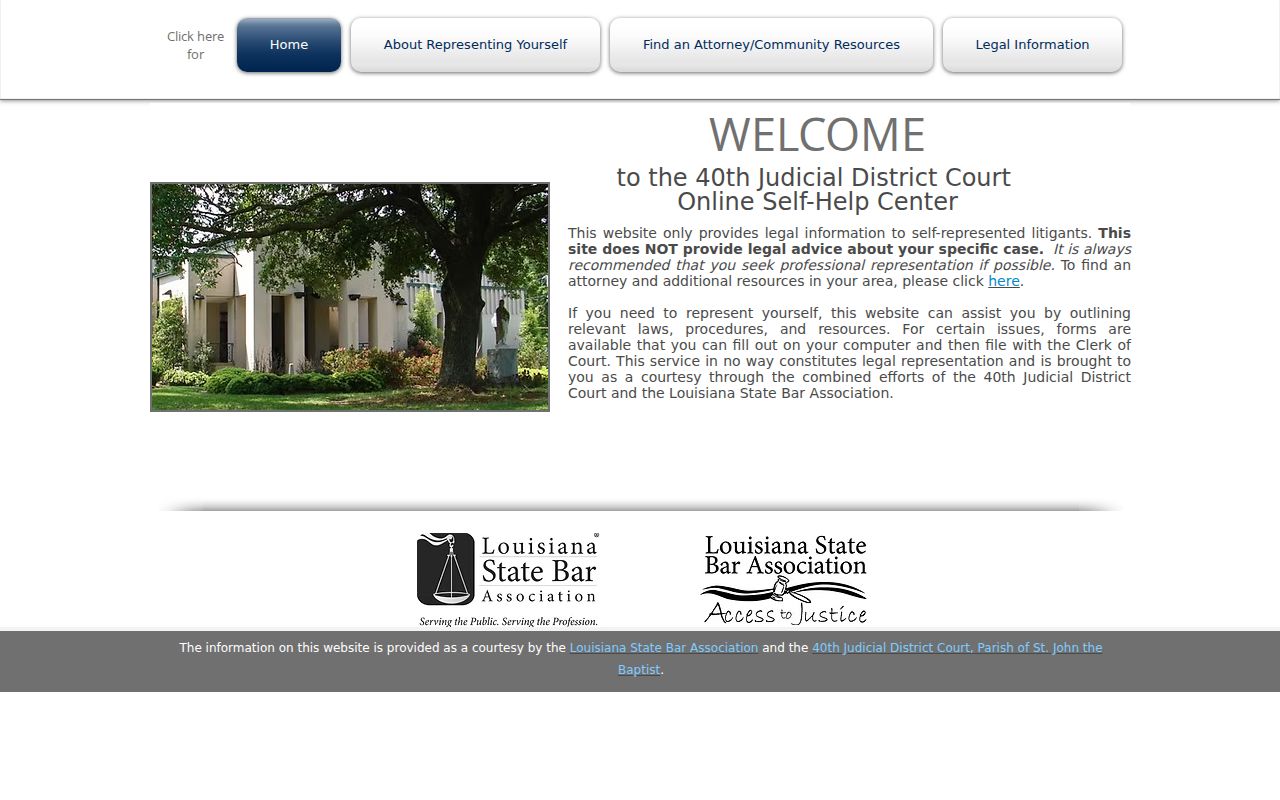
The 40th JDC self-help resource supplies court-supported procedural information.
These separate paths matter. The Sheriff confirms law-enforcement status, the Clerk confirms court action, and state supervision staff address probation or parole reporting.
St. John Parish Record Terms
Short labels can hide major differences in legal effect. Reading the source record and its dates is safer than relying on a commercial summary. These terms commonly appear across St. John the Baptist Parish criminal history sources.
- Arrest cycle
- A fingerprint-linked set of charges reported from one arrest event.
- Bill of information
- A formal charging document filed by the District Attorney.
- Disposition
- The court's result, such as dismissal, plea, acquittal, or conviction.
- Nolle prosequi
- A prosecutor's decision not to proceed with a filed charge at that time.
- Bench warrant
- A warrant issued by a judge, often after a missed court obligation.
- Expungement
- A court-ordered restriction that removes eligible records from ordinary public access while preserving limited statutory access.
One record can be accurate yet incomplete. An arrest entry may correctly reflect intake while omitting a later dismissal. A court file may show the result but not the full police narrative. A rap sheet may wait for a reported disposition. Compare all three before drawing a firm conclusion.
St. John Parish Criminal Records by City
LaPlace, Reserve, and Garyville are the parish's three largest Census-designated places, but none is an incorporated municipality. They do not have separate city police departments, city halls, or municipal courts. Their criminal records run through the parish Sheriff, St. John Parish Correctional Center, District Attorney, and 40th Judicial District Court. The city pages explain how that parish-wide structure affects a search tied to each community.
LaPlace Criminal Records
Largest parish community; Sheriff headquarters and the correctional center are in LaPlace.
Reserve Criminal Records
Unincorporated east-bank community served by parish law enforcement and the 40th JDC.
Garyville Criminal Records
Unincorporated community whose police and court records remain at parish level.
Verify St. John Parish Criminal Records
Start with the source that created the fact being checked. The Sheriff can verify an arrest report or incident file. The jail or VINELink can confirm custody. The Clerk can certify a filed charge, minute entry, dismissal, plea, or sentence. LSP can provide a fingerprint-based review of one's own statewide history. A registry search answers registration questions, not every kind of criminal case.
The Louisiana Public Records Law definitions identify the public offices and records covered by state access rules.
For a correction, obtain the Right to Review, identify the disputed arrest cycle, and secure the certified Clerk disposition if the court result is wrong or missing. Then follow BCII's correction directions. A screenshot from a commercial search service is not authoritative proof.