
Checking Criminal History in Reserve
A useful search separates the event report, custody entry, court case, and statewide history. The St. John the Baptist Parish Sheriff’s Office creates most local police reports. The correctional center records intake and release. The Clerk of Court preserves the prosecution file after the district attorney files a case. BCII, the Louisiana State Police Bureau of Criminal Identification and Information, maintains fingerprint-supported state history.
- Browse the Sheriff’s dated arrest reports for a recent Reserve entry and record the exact name, age, charge wording, date, and warrant type.
- Ask the Sheriff for the incident or arrest narrative, giving the event date, place, person, and report or item number.
- Check parish custody through VINE or call the correctional center when present confinement matters.
- Search the 40th Judicial District Court docket through the Clerk for filed charges, minutes, and disposition.
- For one’s own statewide record, use Louisiana State Police Right to Review through an approved fingerprint channel.
Each stop answers a different question. A one-line arrest post does not replace the deputy’s narrative, and neither proves what prosecutors filed or how the judge resolved the case.
Reserve Has No City Government
Reserve is an unincorporated census-designated place along the Mississippi River. Its April 1, 2020 Census population was 8,541. It has no mayor, municipal police department, municipal judge, or city records clerk. Parish and state agencies perform those functions, so searching for a Reserve city portal or fee form leads nowhere.
Agency identity matters in this river and industrial corridor. The St. John Sheriff handles most local incidents. Louisiana State Police remains custodian when a trooper created the crash or investigative report. Filed criminal cases belong to the Clerk in Edgard, while local bookings occur at the parish correctional center in LaPlace. “Reserve” identifies the community, not a separate records authority.
Reserve Police Department Records
No Reserve Police Department exists. The correct local counter is the Sheriff’s Office at 1801 W. Airline Highway, Reserve, LA 70068, telephone 985-652-9513. The Sheriff holds patrol and investigative reports, executed-warrant material, and other releasable agency records. Ask for a specific item rather than a broad history. Date, time, street or site, person, deputy, incident description, and case number all help staff locate the right file.
The Sheriff public-records channel and its published fee form apply parishwide. Research documents a $25 minimum for up to five printed pages, $1 for each added page, and $50 for a CD, subject to the current custodian’s quote. Active investigations, juvenile details, victim information, and protected identifiers may be withheld or redacted. CAD or 911 audio and body-camera material should be named explicitly because those items may require added review or media work.
Reserve Records Require Travel
Reserve has no local police-records counter. The Sheriff’s headquarters at 1801 W. Airline Highway, LaPlace, handles most incident requests, and the Clerk’s criminal desk at 2393 Highway 18 in Edgard handles court files. The two-office route reflects the parish’s east-bank and west-bank geography.
Sheriff Records Route
1801 W. Airline Highway
LaPlace, LA 70068
985-652-9513
40th JDC Clerk
2393 Highway 18
Edgard, LA 70049
Use the Clerk contact page.
Call first for current hours and the right unit. A certified case outcome comes from the Clerk, not from the Sheriff’s one-line arrest publication.
Reserve Arrests and Bookings
Deputies transport eligible local arrestees to the St. John Parish Correctional Center at 100 Deputy Barton Granier Drive in Reserve. The facility’s prison-information line is 985-359-8625. Booking staff verify identity, take fingerprints and a photograph, inventory property, enter the arresting officer’s charge, screen immediate needs, and route the person toward bond and judicial review. A booking charge remains provisional.
The Sheriff’s dated Arrests Reports archive often lists name, age, locality, and charge or warrant language. “Reserve, LA” may be a locality line, not proof that an event occurred there. Posts also warn that publication does not imply guilt. Juvenile entries are anonymized. For a deeper treatment of archive and booking differences, use the St. John Parish Arrest Lookup.
Reserve Parish or State Custody
A Reserve arrest normally routes to the parish correctional center in LaPlace. If a person later receives a state sentence and transfers, the local roster is no longer the right source. The Louisiana imprisoned-person locator is the official state-custody channel shown in the Reserve manifest.
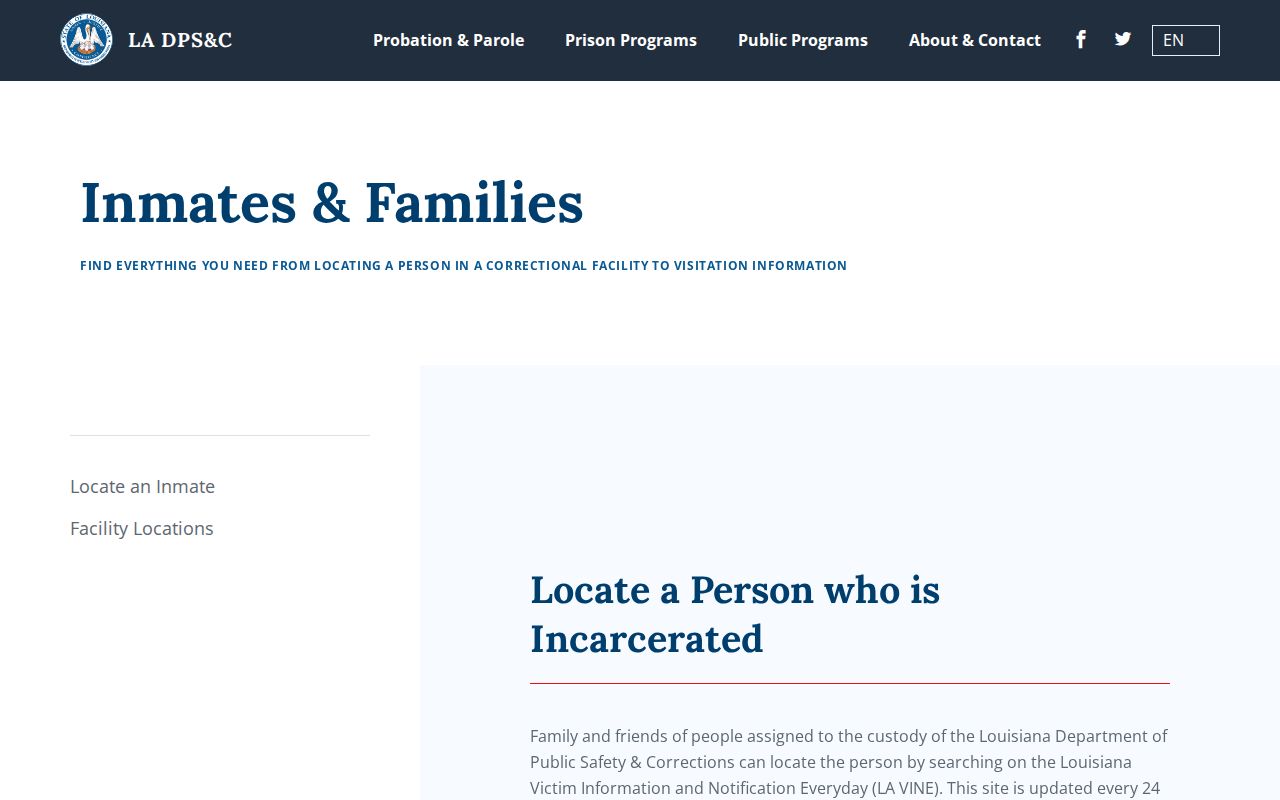
Use VINE or call 985-359-8625 for current parish custody. Use DOC only after a supported state transfer. A missing roster name can also reflect bond, release, or indexing delay, so confirm the court docket before drawing a conclusion.
Municipal Court Records in Reserve
There is no Reserve Municipal Court. State felony and misdemeanor prosecutions arising in the community proceed in the 40th Judicial District Court, with records kept by the St. John the Baptist Parish Clerk of Court in Edgard. Clerk Connect may provide index access, while document images can require registration, subscription, or separate copy fees.
| Court Name | 40th Judicial District Court, not a municipal court |
|---|---|
| Case Types Heard | Parish felony and misdemeanor prosecutions and related criminal matters |
| Case Lookup Channel | Clerk Connect, Clerk criminal desk, mail, telephone, or focused records request |
| What the Docket Shows | Docket number, filing events, charge, plea, minutes, disposition, and sentence when public |
| Copies & Fees | Current Clerk schedule; certification and image access may add charges |
The Clerk’s minutes are the stronger source for outcome. A dismissal, plea, acquittal, or conviction must not be inferred from the original booking label.
Reserve Report or Court Docket
The Sheriff report explains the alleged event and why a deputy acted. The court docket shows whether the district attorney filed a charge and what happened later. That split matters when an archive post uses a broad felony or misdemeanor label. Louisiana does not use a universal letter-class system; offense grade and punishment come from the specific statute.
| Question | Best source | Reason |
|---|---|---|
| What did the deputy report? | Sheriff incident file | Contains the event narrative and legal basis, subject to redaction |
| Is the person held now? | Correctional Center or VINE | Tracks current local custody rather than final guilt |
| What was filed and decided? | Clerk/40th JDC | Preserves charges, minutes, disposition, and sentence |
Certified copies should come from the Clerk. For a current allegation, allow time for screening and docket creation.
Where Reserve Records Go
A deputy’s file begins at the Sheriff. Booking data moves through the correctional center. The district attorney then may accept, refuse, amend, or add charges. Once a prosecution is filed, the Clerk’s docket becomes the official case timeline. Fingerprints and reportable dispositions can reach BCII, Louisiana’s central criminal-history repository.
Reserve entries can also involve an outside custodian. A fugitive-warrant label points toward the agency that issued the underlying demand. A bench or attachment warrant usually points back to the issuing court and its docket. When State Police made the arrest, request its investigative file from LSP even if the person entered the parish jail. These distinctions keep one local event from being mistaken for a complete resident history. They also explain why a single name search rarely settles every question.
A one-line charge label often leaves the central question unanswered. The Sheriff public-record route can supply the incident narrative when it is releasable, while the dated post helps identify the likely date and spelling. Provide the person, date, Reserve locality, incident site if known, and item number. A narrow request can reduce search time and avoid needless pages under the published fee schedule. If the record uses “fugitive warrant,” contact the named outside agency for the originating case. If it uses “bench warrant” or “attachment warrant,” consult the issuing court’s file for the missed appearance or other proceeding.
Record flow: St. John Parish Sheriff › Parish Correctional Center › 40th Judicial District Court › Louisiana State Police BCII
Recent activity often appears first in a dated Sheriff post or custody system. Older, fully processed matters are better checked through court records and, for one’s own statewide history, Right to Review. Database updates do not always occur at the same speed, so a cleared or corrected matter should be verified at each official source.
Correcting a Reserve Name Match
A name-only arrest post can confuse people who share a name. Louisiana State Police BCII offers Right to Review for one’s own fingerprint-linked history, using the Louisiana Applicant Processing Solution or another approved capture method.
The official LAPS and Right to Review instructions supplied this Reserve image.
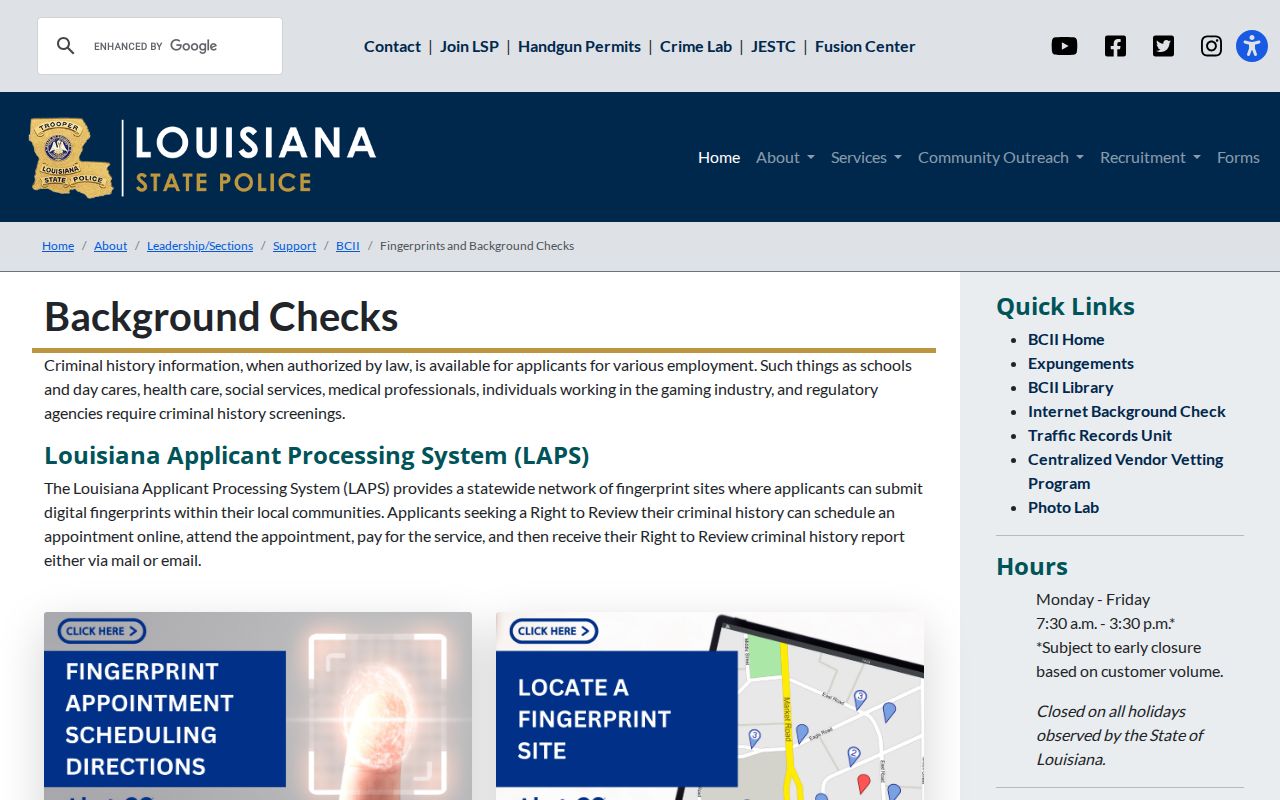
Fingerprints help distinguish identities and create a formal path to challenge an error. Obtain the Clerk’s certified disposition as support when the state record lacks a final outcome.
Reserve Expungement Verification
An expungement order limits access under Louisiana law, but a person should verify that each official system has processed it. Begin with the Clerk’s case file, then review one’s fingerprint-based BCII history. Do not treat a vanished web post as proof that the legal process is complete.
Louisiana Code of Criminal Procedure article 978 is the expungement source captured for Reserve.
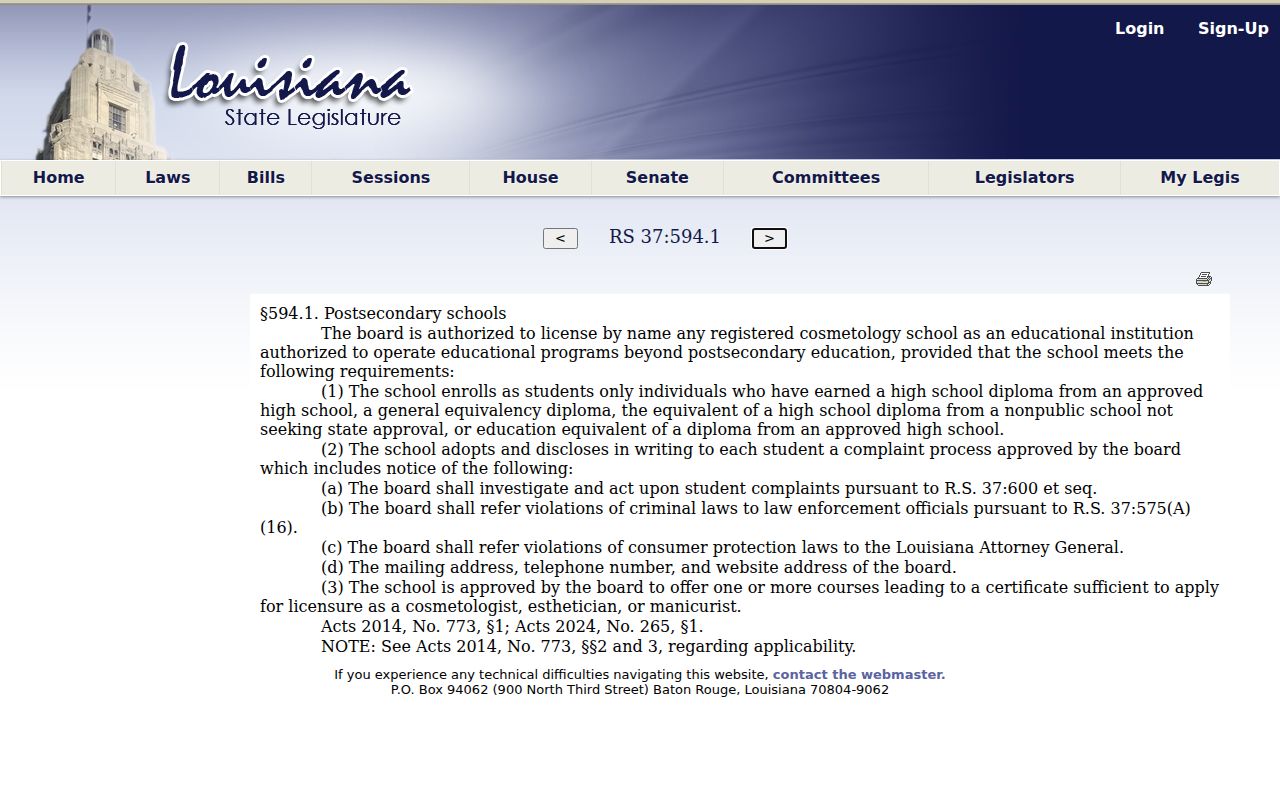
The Clerk reports added St. John processing amounts of $100 for a felony filing and $50 for a misdemeanor filing, on top of other statutory charges. Confirm all current fees and eligibility before filing.
Public Access Rules in Reserve
The locality line in a Reserve arrest post needs careful reading. It may identify the person’s stated community rather than the place of the alleged event. The post also stops at the arrest-side claim. To build a supported timeline, preserve the exact date and wording, check current parish custody, and then allow time for the district attorney’s screening and the Clerk’s docket entry. A later docket can show that prosecutors refused, changed, added, or filed a charge. Only the court outcome supports a statement about dismissal, plea, acquittal, conviction, or sentence.
Juvenile entries show another local access boundary. The Sheriff’s archive anonymizes juveniles, and a public-record request cannot be used to bypass protections for a child’s identity. Active investigations, victim information, protected identifiers, and sealed or expunged material may also be withheld or redacted. A requester should ask for the releasable portion rather than assume that one exemption closes the whole file. When the sought item is a state-police crash or investigation, use LSP’s request channel because the nearest parish office is not automatically the custodian.
The Louisiana Public Records Law generally supports access to existing public records held by the Sheriff and Clerk, but it does not make every detail open. Active investigative material, juvenile records, sealed or expunged files, victim data, protected identifiers, and some warrant information can be restricted. A custodian may redact exempt portions while releasing the rest.
Key Statutes:
Louisiana Public Records Law, R.S. 44:1 defines public records and the offices that hold them.
Louisiana R.S. 44:31 states the general right to inspect, copy, or reproduce public records, subject to law.
Louisiana R.S. 15:588 provides a right to review and challenge one’s own state criminal-history record.
Ask the agency that created the record. A narrow request with identifiers is faster to search and less likely to incur avoidable copy or media costs.