
St. John Parish Criminal Court Cases
The 40th Judicial District Court is the Louisiana District Court of general jurisdiction for St. John the Baptist Parish. It hears felony prosecutions and parish-level misdemeanors. The Clerk of Court, not the Sheriff, holds the official docket, pleadings, minutes, judgments, sentencing instruments, and certified dispositions. Court work is centered at the St. John the Baptist Parish Courthouse, 2393 Highway 18, Edgard, Louisiana 70049.
A Sheriff arrest report belongs to an earlier stage. The District Attorney may accept, refuse, add, or amend a charge before a bill of information or indictment is filed. The court file therefore answers a different question from the parish arrest lookup: what allegation reached court, what occurred at each hearing, and what final result the judge entered.
Clerk Connect for Parish Court Cases
The official St. John the Baptist Parish Clerk of Court is the starting point for Clerk Connect information. The vendor service can expose index material, but an account, subscription, or payment may be required for full document images. A searcher should select the St. John the Baptist database and criminal index, then use a legal name or docket number. Live options behind the account gate can change, so the page should be checked before relying on a specific control.
| Search field | Type | Use |
|---|---|---|
| Parish/database | Dropdown | Select St. John the Baptist and the criminal index |
| Last name | Text | Primary name key; try known variants separately |
| First name | Text | Narrows a common surname |
| Docket or case number | Text | Best key once known; preserve punctuation |
| Date or year range | Selector/text | Limits an older index search when offered |
| Search / Clear | Buttons | Runs or resets the query |
Searching St. John Parish Case Records
Begin online when the name and approximate filing year are known. Use the docket number for every later request because it separates people with similar names. If Clerk Connect does not show the case, contact the criminal department through the Clerk’s official contact page. Older, non-imaged, or restricted files may require a counter, telephone, or written request.
- Select the parish criminal index in Clerk Connect.
- Search the exact legal surname, then add the first name or year.
- Open the matching index and record the docket number.
- Compare filing, minute, disposition, and sentence entries.
- Ask the criminal clerk for a certified disposition when proof matters.
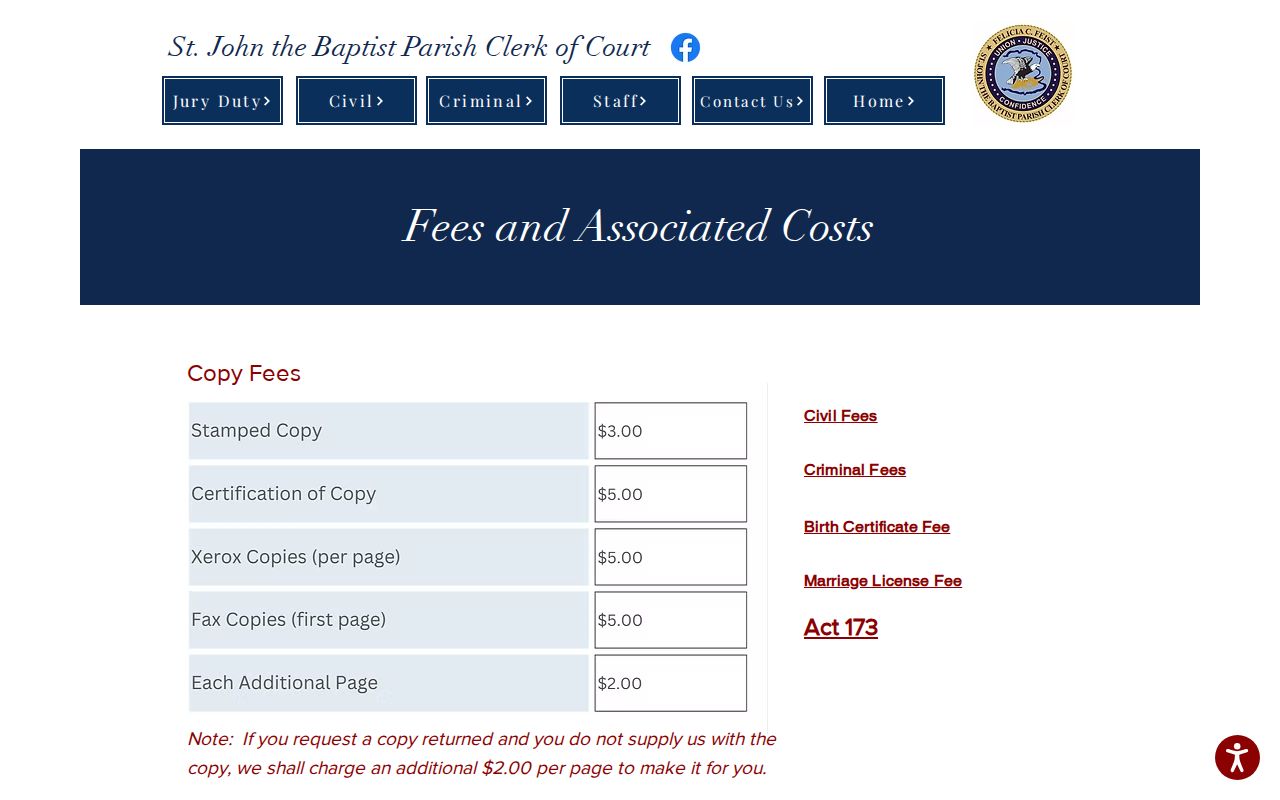
Certification and search charges should be confirmed before ordering. The Clerk fee page states that if the requester does not provide the copy to be returned, an added $2 per page may apply to make it. Subscription access does not turn an uncertified screen into an official judgment.
Certified St. John Court Dispositions
A certified disposition is the best short answer when a person needs to prove how a St. John the Baptist Parish case ended. It may establish a conviction, dismissal, acquittal, plea, sentence, or another final action. Request it from the criminal clerk at the Edgard courthouse and provide the docket number, party name, and approximate year. Ask about the current certification, copy, search, delivery, and payment rules before sending funds.
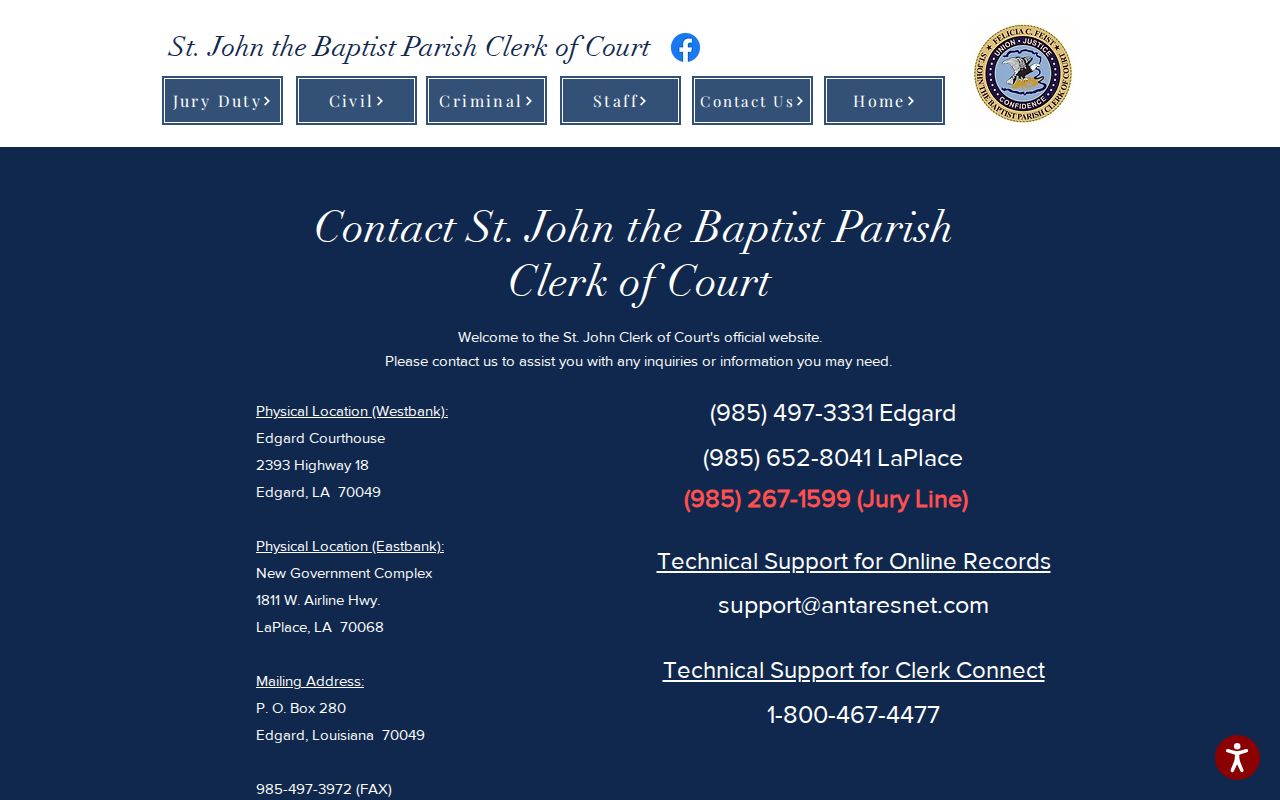
The Clerk’s official contact source shows where current department details can be checked. The captured Clerk contact page illustrates the correct official route.
A counter or written request can also reach files that are not imaged online. Government-issued identification is prudent for pickup, and courthouse screening rules apply.
Inside a St. John Parish Case File
The index and file together can trace a prosecution from filing to outcome. Field availability varies, and protected identifiers, juvenile facts, victim details, grand-jury material, and sealed documents may be withheld. No private defendant record was used to construct this inventory.
| Docket identity | Case number, caption, filing date, division, judge, and party names. |
|---|---|
| Filed charge | Charge, statute, and bill or indictment type recorded by the Clerk. |
| Proceedings | Minute dates, arraignment, counsel, motions, hearings, plea, and trial events. |
| Custody links | Bond and warrant references when entered in the court record. |
| Outcome | Disposition, sentence, costs, fines, and judgment entries. |
| Documents | Pleadings, minutes, orders, and images when public and available. |
Arrest Charges and Parish Filed Charges
An arresting officer records the suspected offense at the time of arrest. The District Attorney later screens that file and decides what, if anything, to prosecute. A bill of information or indictment can use a different statute, add counts, narrow counts, or omit the arrest charge. That difference is routine and is why an arrest label should never be reported as a conviction.
The official Clerk fees page also explains access and copy information. Its captured image provides a visual reference for the parish’s official court channel.
Follow the court caption and docket number, then read the final minute or judgment. If a charge was dismissed, the court record is the source for that result even if an older arrest post remains online.
How a Criminal Case Moves
A custodial arrest may begin with probable-cause and bond review, but the Clerk’s timeline becomes central after formal filing. Felonies proceed by bill of information or indictment as Louisiana law requires, while misdemeanors commonly proceed by affidavit or bill. Each step can generate a minute or filed instrument.
Discovery and motions occur after arraignment. A dismissal, guilty plea, acquittal, or trial verdict supplies the disposition. A guilty outcome moves to sentencing. The Clerk’s minutes are the durable court timeline; the Sheriff’s dated post ends at the arrest-side allegation.
Reading St. John Parish Case Outcomes
Outcome words must be read precisely. A dismissal means the charge ended without a conviction in that case, while an acquittal follows a not-guilty finding. A conviction can follow a guilty plea or verdict. “Nolle prosequi” reflects the prosecution’s decision not to proceed with a charge, but the exact minute should be reviewed for context.
- Arraignment
- The hearing at which the accused receives the filed charge and enters a plea.
- Minute entry
- The Clerk’s dated account of what occurred in court.
- Disposition
- The recorded way a charge ended.
- Sentence
- The punishment or conditions imposed after a guilty outcome.
- Bench warrant
- Court process that may follow nonappearance or noncompliance.
Parish Court or Federal Docket
The St. John Clerk does not hold federal prosecutions. St. John the Baptist Parish lies in the U.S. District Court for the Eastern District of Louisiana. Federal charging documents, orders, judgments, and sentencing records are searched through PACER. A local Sheriff incident can exist beside a federal docket, so identify which prosecutor filed the charge before choosing the custodian.
The official Eastern District of Louisiana site is the federal court source. The captured court homepage helps distinguish that system from the parish Clerk.
PACER is the official docket service and generally charges by the page under current judiciary rules. A federal inmate search is a custody tool, not a substitute for the federal judgment.
Case Record Access and Restrictions
Louisiana Public Records Law supports access to public court material, but it does not erase confidentiality rules. Juvenile files, sealed or expunged records, protected identifiers, victim information, grand-jury material, and some sensitive exhibits may be closed or redacted. Document images can also be limited by subscription without making the underlying public record confidential.
The Louisiana Supreme Court is the official source for statewide judiciary information and rules. Its captured homepage shows the appellate layer above the parish district court.
Appeals from the 40th JDC proceed to the Louisiana Fifth Circuit Court of Appeal, with further review possible in the Louisiana Supreme Court. Ask the relevant appellate clerk for that docket.
The Louisiana clerk-fee statute supplies the official source for criminal and expungement charges.
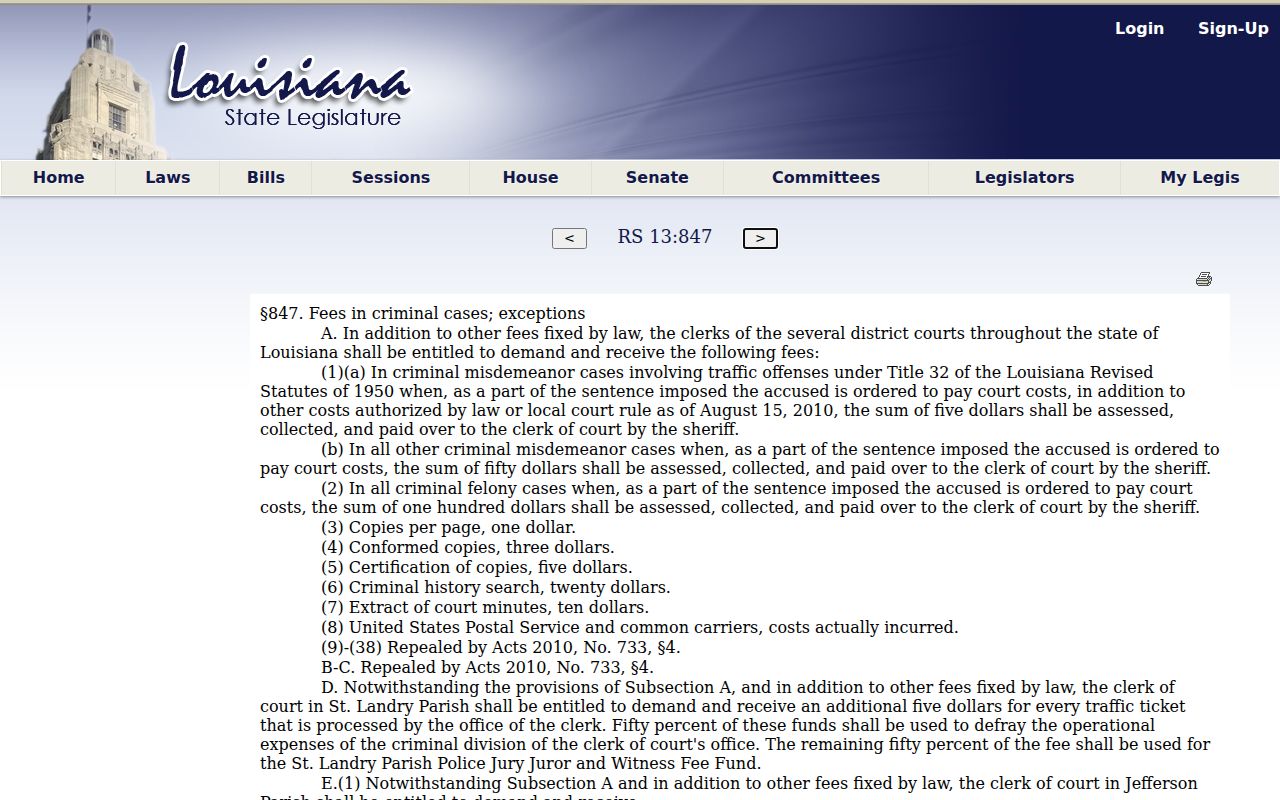
For expungement, St. John has additional processing amounts of $100 for a felony and $50 for a misdemeanor on top of other statutory charges. The captured law supports the local fee details and reinforces why current totals must be verified with the criminal clerk before filing.
PACER for St. John Federal Cases
PACER requires registration and is separate from Clerk Connect. Search the Eastern District of Louisiana when a St. John matter was prosecuted federally, then use the federal case number to retrieve docket entries. The service’s captured official page shows the correct federal access channel.
Never assume a parish name search includes federal records. Conversely, PACER does not replace the 40th JDC file for a state prosecution. The named court on the charging paper is the simplest custodian test.
A useful St. John the Baptist Parish search starts with the document already in hand. A Sheriff arrest post points to an arrest-side event, while a bill of information, indictment, minute entry, or judgment points to the 40th JDC. A federal caption names the United States as the prosecuting party and belongs in the Eastern District. Preserve the caption and number exactly because those details are more reliable than a broad name search.
When Clerk Connect returns several similar names, compare the filing year, caption, docket number, division, and event dates. Do not use an address or age as the sole identity test because public index fields can be incomplete. Once the correct parish docket is identified, request specific items instead of an undefined complete file. A disposition, sentencing instrument, or selected minute entry is often faster to identify and less costly to copy.
An older case may have an index entry without scanned images. That does not mean the file was destroyed or closed. Contact the criminal department and ask whether the paper or archived record can be searched at the counter or supplied by written request. State the party name, approximate year, docket number if known, and exact document sought. Confirm current search, copy, certification, delivery, and payment requirements before ordering.
A public docket can include a restricted filing, and a public hearing can produce a redacted minute. Expungement generally removes qualifying material from public access while preserving limited access Louisiana law authorizes. If a result disappears after an order, rely on the Clerk’s response and signed order rather than a saved third-party copy. When a record seems wrong, a certified parish disposition gives BCII a stronger correction source than an index screenshot.