
Sex Offender Checks in St. John Parish
The Louisiana State Police Bureau of Criminal Identification and Information maintains the statewide registry from submissions made by corrections, courts, and local law enforcement. A parish search can be filtered to St. John the Baptist, or narrowed with a locality such as LaPlace, Reserve, or Garyville. The St. John Sheriff is the local verification contact at 985-652-9513.
The registry warns that LSP does not solely control the submitted information and cannot guarantee every profile’s completeness or timeliness. Match more than a name. Review the photograph, aliases, physical details, reported address, registering agency, offense, tier, and update information before deciding whether an entry concerns the right person.
Accepting Louisiana Registry Search Conditions
The official Louisiana registry entry requires users to scroll through conditions and choose “I AGREE” before searching. Selecting “I DO NOT AGREE” denies entry. Those terms explain the limits of submitted data and warn against misuse.
The captured LSP registry page shows the proper government starting point for a St. John the Baptist Parish sex offender search.
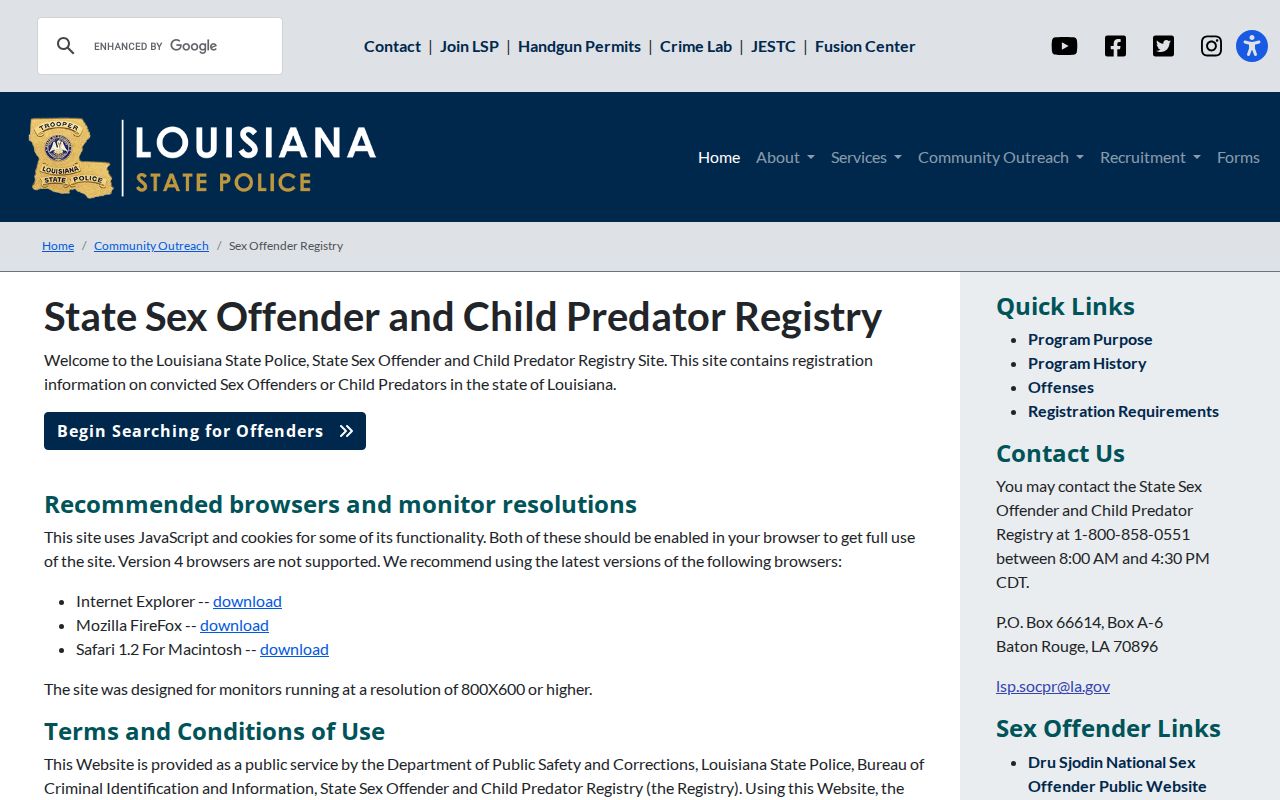
Read the conditions each time because the interface and wording may change. Never bypass the warning by relying on a copied commercial profile. The originating registry and local agency are the sources to contact about a possible error.
How to Search the Louisiana Registry
A search can begin with a legal name or a geographic key. Person and place routes serve different purposes: a name search checks a known identity, while an address, city, ZIP, or parish search supports neighborhood awareness. Partial-match behavior is not promised.
- Open the official LSP registry and read the conditions.
- Select “I AGREE” to reach the search interface.
- Enter a name or use an address, city, ZIP, or parish field.
- Review possible matches and open the full official profile.
| Field or control | Type | Required | Use |
|---|---|---|---|
| I AGREE | Button | Yes to continue | Accepts registry conditions |
| Last name | Text | Name route | Use legal surname |
| First name | Text | No | Narrows person results |
| Address | Text | Geographic route | Supports proximity searching |
| City / ZIP | Text or dropdown | No | Limits place results |
| County/Parish | Dropdown | No | Select St. John the Baptist |
| Search / Reset | Buttons | No | Runs or clears the query |
Verify a St. John Registry Listing
If a reported address appears wrong, a verification date looks stale, or a profile suggests noncompliance, do not confront the registrant or household. Contact the St. John the Baptist Parish Sheriff at 985-652-9513 and the statewide Registry at 1-800-858-0551. The statewide line is published for 8:00 a.m. to 4:30 p.m. Central. Immediate danger belongs with 911.
Provide the profile name, registry identifier if shown, address or field in question, and a concise description of the discrepancy. The Sheriff can route a local verification concern, while BCII maintains the statewide record. The public cannot correct an entry by editing or reposting it.
Inside a Louisiana Registry Profile
Public fields vary by person and legal authority. A typical official profile can display identity, physical, residence, offense, registration, and compliance information. A listed residence is reported data, not proof of presence at a particular moment.
| Name and aliases | Primary identity and other names reported to the registry. |
|---|---|
| Photo and description | Photograph, sex, race, age or birth data, height, weight, hair, eyes, scars, marks, or tattoos when public. |
| Reported locations | Residence and, where law permits, work or school information. |
| Offense details | Statute, conviction jurisdiction or date, and victim-age category when displayed. |
| Tier | Louisiana classification tied to duration and renewal duties. |
| Registration status | Compliance, registering agency, updates, verification, vehicles, or other public fields. |
Why St. John Profiles Need Verification
LSP expressly cautions that it cannot guarantee completeness or timeliness because information reaches the registry from multiple sources. A move, correction, court action, or agency update may take time to reach every display. The right response is to verify with the registry and the local registering agency.
The LSP registry program-history page explains the statewide program’s development. Its captured official source provides context for how local registration information reaches BCII.
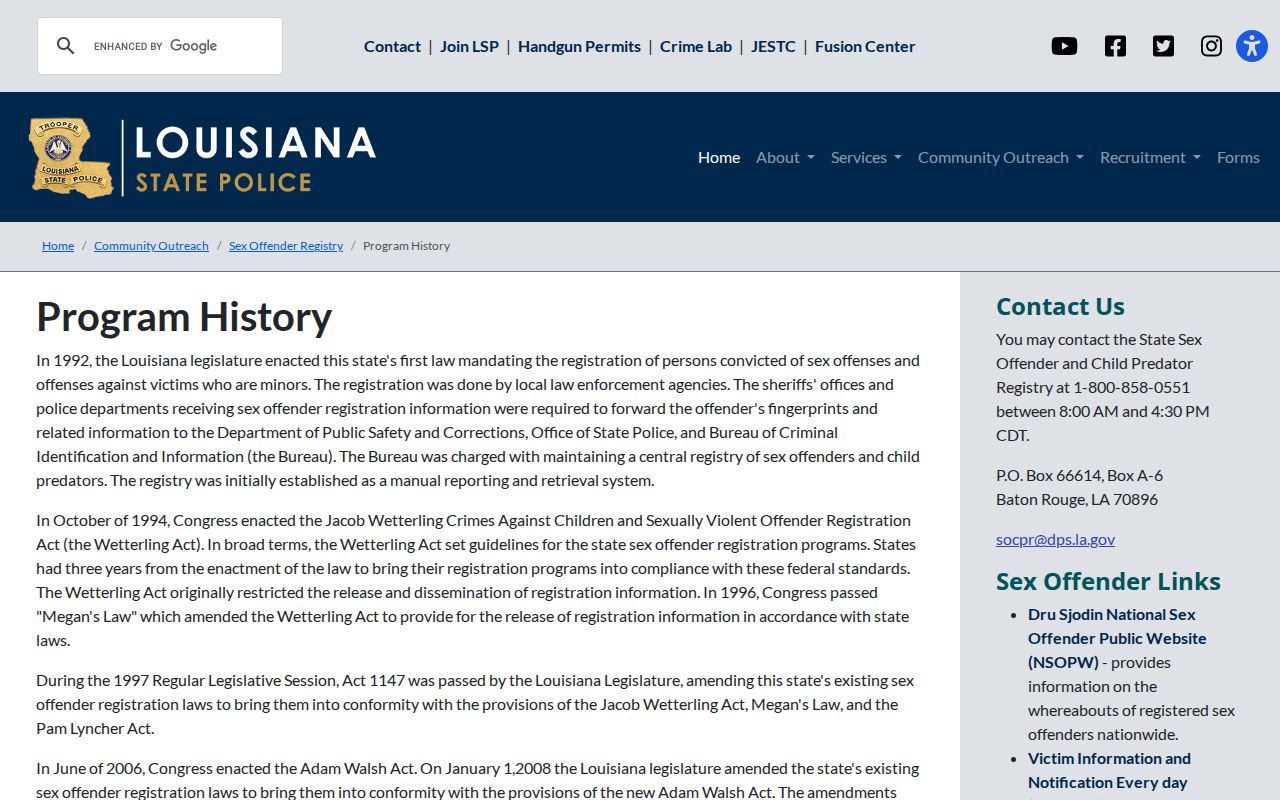
Do not infer a tier from a short offense label. Louisiana’s official offense list includes detailed statutes and some repealed offenses whose qualifying earlier convictions still require registration. The profile and current LSP materials control.
Louisiana Registration Levels and Requirements
Louisiana uses three tiers. The tier affects how long registration continues and how often in-person renewal occurs. Current law and the official offense classification should be checked because a familiar charge name alone may omit facts that determine the tier.
| Tier | Official description | Duration | Renewal |
|---|---|---|---|
| Tier I | Registerable offenses other than aggravated offenses or sexual offenses against a minor | 15 years | Annual, in person |
| Tier II | Sexual offenses against a victim who is a minor | 25 years | Semiannual |
| Tier III | Aggravated offenses and other Tier III classifications | Lifetime | Quarterly |
Key provisions include R.S. 15:541 definitions, 15:542 registration, 15:542.1 notification, 15:542.1.1 renewal, 15:542.1.2 changes, 15:542.1.4 failure-to-register penalties, and 15:542.1.5 BCII duties.
St. John Registration Renewal Duties
Tier I registrants renew in person each year, Tier II registrants renew twice each year, and Tier III registrants renew quarterly. Other statutory duties can include reporting required changes. The registering agency submits local information into the BCII-managed statewide system.
LSP publishes official registration-requirement guidance. The captured page is the right source for checking present duties rather than relying on a simplified third-party summary.
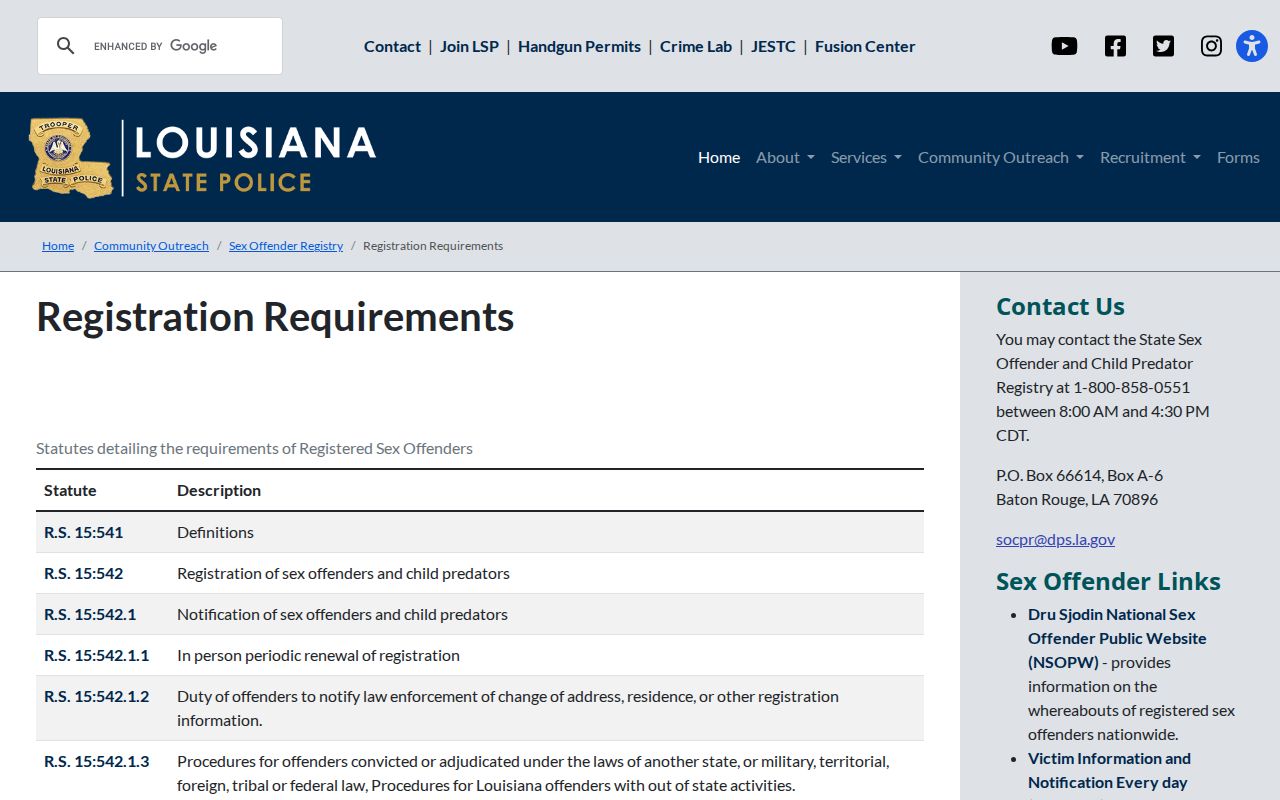
A missed renewal or unreported required change can raise a compliance issue, but the public profile and a caller’s suspicion do not decide guilt. Report the concern through official channels and allow law enforcement to verify it.
Louisiana Tiers and Offense Classifications
The official LSP offense list ties statutes to registration classifications and notes older repealed provisions that can still affect qualifying convictions. Readers should use that list with the profile rather than guessing from a short charge description.
The captured LSP offenses page is a primary source for current tier context.
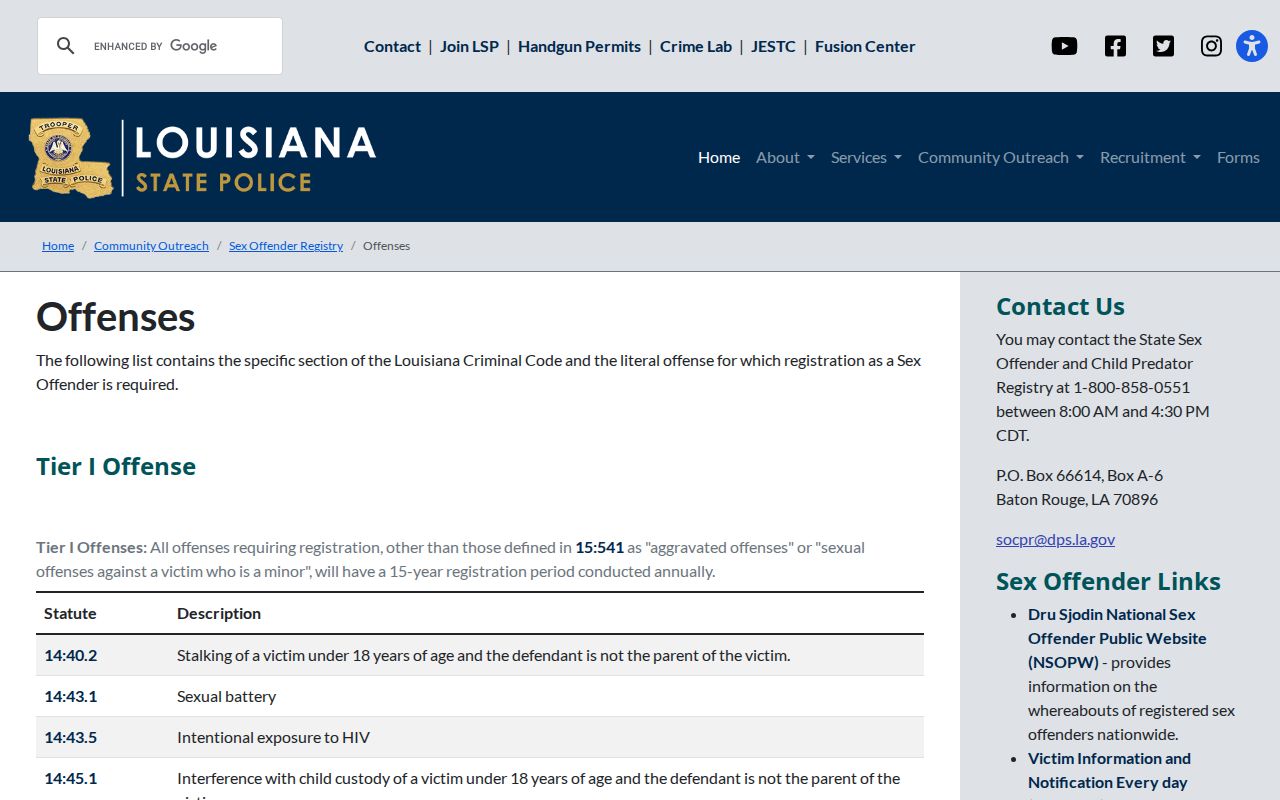
A victim-age category, statutory subsection, conviction date, or jurisdiction can matter. If a profile seems inconsistent, ask the Registry to explain or correct the classification instead of publishing a personal interpretation.
Louisiana Registry and NSOPW Compared
The Louisiana registry is the originating state system for St. John the Baptist Parish entries. The U.S. Department of Justice National Sex Offender Public Website offers a cross-state search when a person or location may involve more than Louisiana. NSOPW does not become more current than the registry that supplies its data.
The official NSOPW search provides the national layer. Its captured homepage shows the government service to use for multi-jurisdiction searching.
For a St. John result, open the underlying Louisiana profile and direct accuracy questions to LSP or the Sheriff. Use both systems for awareness, not as substitutes for emergency services.
Community Notification and Lawful Use
The registry exists for public awareness and safety planning. Louisiana law provides registration, notification, renewal, change-reporting, and enforcement duties. A reader may use public information to make informed personal or family safety choices, but not to punish, threaten, or organize harassment against a registrant or household.
Misuse can lead to prosecution: Threatening, intimidating, or harassing a registrant or family member with registry information can bring criminal prosecution or civil liability under Louisiana law.
The Louisiana criminal-history dissemination statute also supplies public-access context. Its captured legislative page reinforces that registry information is governed by law, not unlimited personal use.
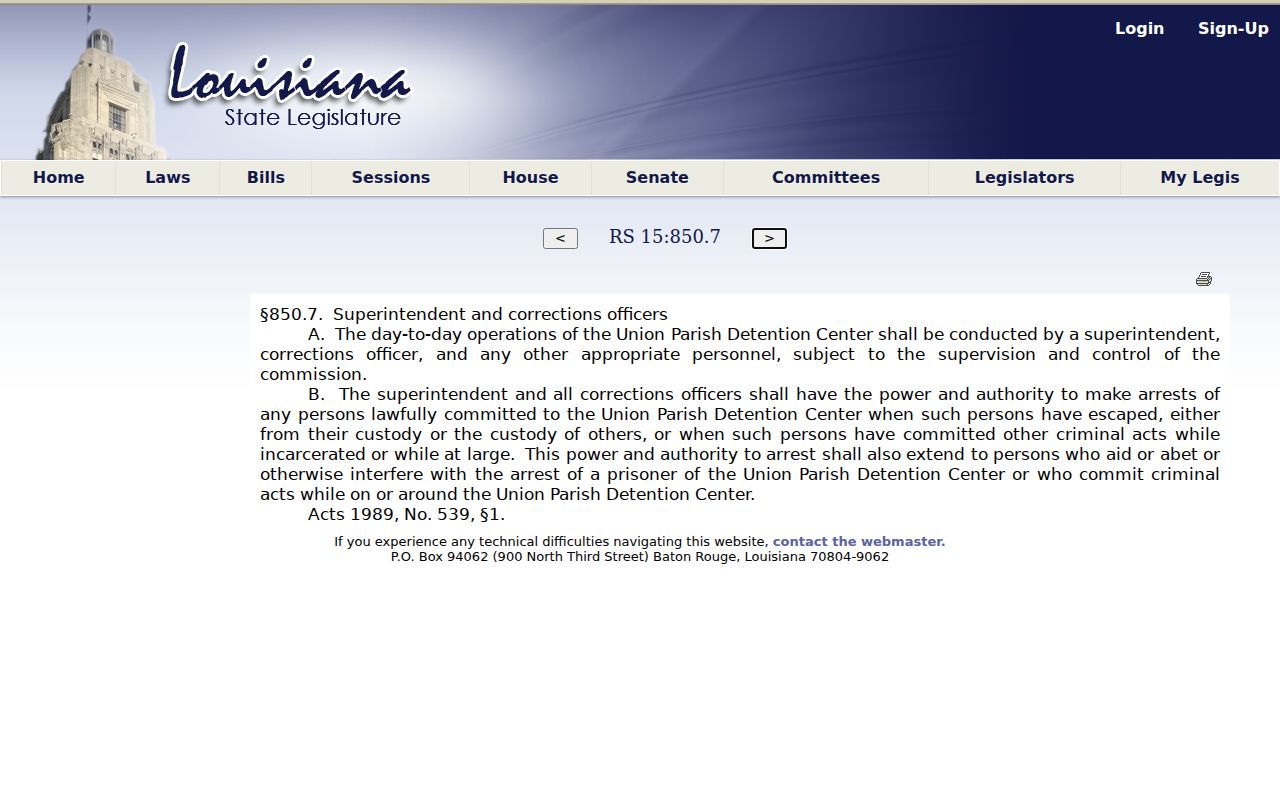
Contact LSP at 1-800-858-0551, P.O. Box 66614, Box A-6, Baton Rouge, LA 70896, or socpr@dps.la.gov for statewide registry questions. Contact the St. John Sheriff for local verification. Call 911 if the concern involves immediate danger.
A careful geographic search should be repeated with more than one place key when needed. Select St. John the Baptist in the parish field, then try the relevant locality or ZIP. An address route can help with proximity, while a name route helps confirm a known person. Match results through the full profile rather than one name because aliases and similar names can create confusion.
Each profile field has a limited meaning. The reported residence is not a live location tracker. A work, school, or vehicle field appears only when Louisiana law and the available submission make it public. A verification date shows a registry event, not a promise that each fact was independently checked that day. The registering agency and status fields help identify which official office should receive a question.
St. John the Baptist Parish verification follows a division of roles. LSP BCII maintains the statewide display, while the St. John Sheriff receives local verification and suspected noncompliance concerns. Courts and corrections also supply information that can affect profiles. Report the exact field that seems wrong and let those agencies compare records. Reposting a suspected error can spread stale data and does not correct the official entry.
Tier duties should be read from the official statute and LSP classification, not guessed from a brief offense label. Tier I generally carries 15 years and annual in-person renewal. Tier II generally carries 25 years and semiannual renewal. Tier III generally carries lifetime registration and quarterly renewal. A statutory subsection, victim-age classification, conviction date, or older repealed offense can affect the result, so the profile and current offense list deserve priority.
NSOPW adds value when a search crosses state lines, but it remains a gateway to information supplied by participating jurisdictions. If its St. John result differs from Louisiana’s page, open the originating Louisiana profile and contact LSP. Neither service replaces 911 in an emergency. For routine safety planning, note the source, access date, profile status, and last shown verification information, then check again when circumstances change.